

Emergency messaging in regional and remote Australia
Regional and remote communities can face higher risks during disasters.
People living in these communities may:
be more exposed to bushfires, floods and extreme weather
- be further from emergency services
- have limited access to infrastructure and resources
- have limited internet or mobile coverage
- use older phones or share devices
- use a mix of mobile phones, landlines and local warning practices.
Access to timely information helps communities prepare and respond during emergencies.
AusAlert sends near-instant emergency messages to compatible mobile devices across Australia.
AusAlerts may be sent by local or state emergency services organisations or the Australian Government.
Alerts help people in regional and remote areas stay safe and informed because:
- information can be sent directly to the affected area
- warnings help people make decisions to stay safe
- people travelling or working across large areas can be alerted quickly.
How the technology works
AusAlert uses cell-broadcast technology through active 4G and 5G mobile networks. It doesn't rely on phone numbers. If you don't have mobile coverage in your area, or if a nearby cell tower is damaged, you may not receive an AusAlert.
You may still receive an AusAlert if your phone can’t make calls or send text messages (SMSs) or if it shows ‘emergency calls only’. As long as your phone is within range of a mobile phone tower, the alert can be delivered – even if that tower belongs to a different mobile provider than the one you’re with.
Mobile phones made before 2019 may not receive AusAlert messages. If you own a phone with a prepaid SIM card, you may still receive an AusAlert, even if you have no data left.
Landline support
In areas affected by an emergency, automated voice messages may also be sent to landline phones. This helps people without reliable mobile coverage receive important information.
An AusAlert looks something like this:
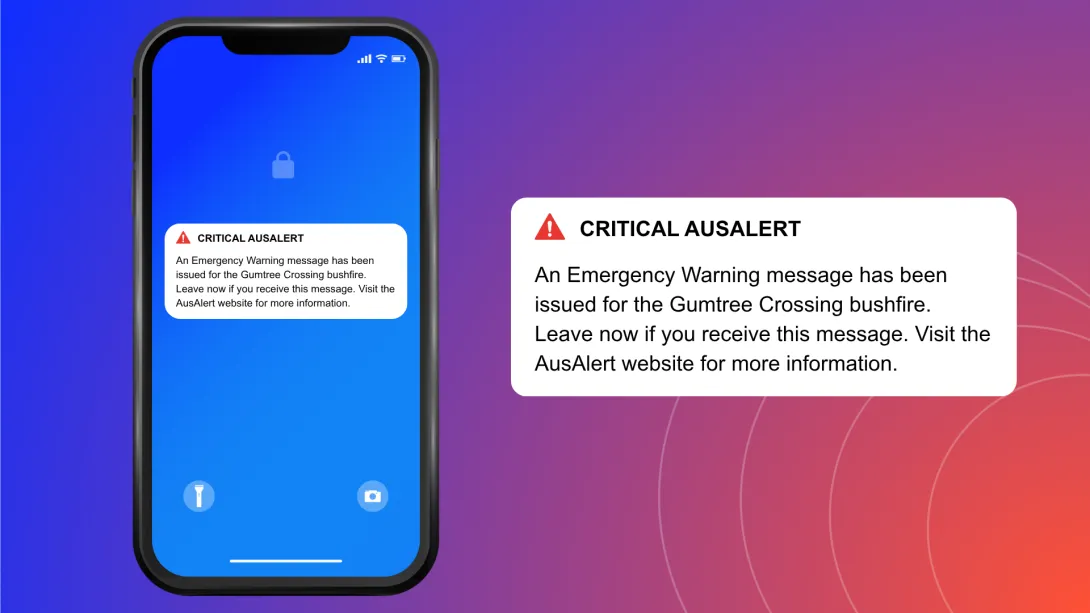
An AusAlert sounds like this:
Other ways to get emergency information
AusAlert is just one way to stay safe in an emergency.
If you live in a regional or remote community, you should also use:
- landlines and public phones
- local radio and news broadcasts – the ABC is the official national emergency broadcaster
- community practices such as meeting points and local emergency services
- trusted community members, neighbours, friends and workmates.
It’s important you don’t wait to receive an AusAlert before acting in a disaster.
If you don't want to receive some AusAlerts
AusAlerts contain life-saving information and are recommended to be turned on to help keep you safe.
If an AusAlert may cause stress or harm for you or someone you care for, you can choose to turn some AusAlerts off or adjust how they appear and sound.
Find out how to turn off an AusAlert.
If you do this, use other sources to stay updated, such as radio, television or ABC online.